

Seat Covers Must Be Compatible with Airbags
17. April 2025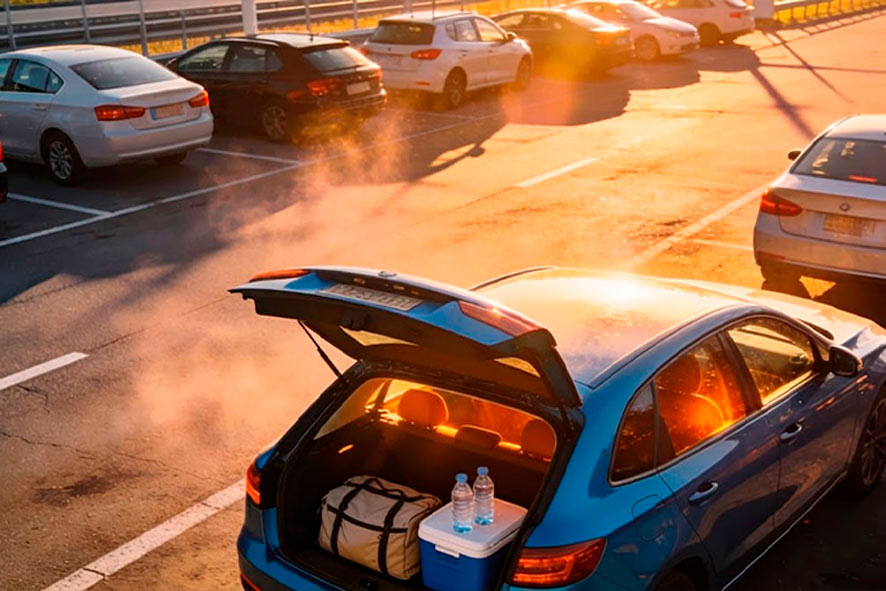
A heatwave doesn’t have to ruin your holiday. Whether it’s a city trip, a camping holiday, or a long drive – a few simple measures can significantly reduce the risks of high temperatures. The Touring Club Switzerland (TCS) has compiled the most important recommendations.
Why the Topic of Heat While Traveling Matters
Extreme heat can affect your health, impact road safety, and put extra strain on vehicles. Anyone who knows the main risks and follows a few simple rules can stay safe on the road even in high temperatures.
The Biggest Risks During a
Heatwave
Health Risks
In extreme heat, the body loses more water and minerals through sweating – this can lead to dehydration, circulatory problems, or exhaustion. Young children, older people, and those with chronic illnesses are especially at risk. Early signs such as headaches, dizziness, nausea, or difficulty concentrating should be taken seriously.
The Car as a Heat Trap
A parked vehicle heats up rapidly, even after just a short time. Even at moderate outside temperatures, the interior can reach levels that are dangerous for people and animals. For this reason, children and pets should never be left unattended in a vehicle – not even for a few minutes.
Heat Impairs Driving Safety
Intense heat reduces concentration and reaction time. Fatigue, discomfort, or dehydration increase the risk of accidents. On longer journeys, take regular breaks, drink enough water, and keep the interior at a comfortable temperature.
Heat Puts Heavy Strain on Batteries and Vehicles
Tires, the cooling system, and the air conditioning are put under greater strain at high temperatures. The performance and lifespan of electric car and e-bike batteries also suffer when exposed to direct sunlight for extended periods.

Good to Know
After just a few minutes, the temperature inside a vehicle can rise well above the outside temperature. Park in the shade whenever possible, use a sunshade for the windshield, and ventilate the interior regularly.
Preparing Well for Departure
Good preparation goes a long way toward reducing the effects of heat.
Check Your Vehicle
Before a longer trip, it’s worth doing a quick vehicle check. In particular, check:
- Coolant and engine oil
- Tire pressure
- Windshield washer system
- Battery condition
- Air conditioning function
A well-maintained air conditioning system improves comfort and contributes to driving safety.
Weather and Trip Planning
Before you leave, check weather forecasts and heat warnings for your destination – especially in Southern Europe, North Africa, or the Middle East. Where possible, schedule sightseeing, hikes, and longer drives for the cooler morning or evening hours.
Preparing Electric Cars and E-Bikes
Batteries are especially sensitive to high temperatures. Charge in the shade whenever possible and avoid prolonged direct sunlight. On longer trips, plan breaks for charging and resting.
Don’t Forget Sun Protection
The basic essentials for traveling in the heat include:
- Sunscreen with an appropriate SPF
- Sunglasses with UV protection
- A hat or head covering
- Light, light-colored clothing
- Sun protection for the vehicle
Plan for Enough Water
Fluid requirements rise significantly in the heat. Bring enough drinking water with you. Families with children and older travelers should plan for an extra supply in case of delays.
What to Watch Out for During the Trip
Drink Enough
In the heat, the body loses more fluid than usual. Drink water or unsweetened beverages regularly – even if you don’t feel thirsty. This is especially important during long drives, hikes, or sightseeing.
Avoid the Midday Heat
Temperatures are highest between late morning and early evening. Schedule strenuous activities for the cooler parts of the day, and otherwise stay in the shade or in air-conditioned spaces.
Take Regular Driving Breaks
Heat increases fatigue and impairs concentration. Even short breaks help you recharge and stay alert behind the wheel. Use the time to drink, stretch your legs, and get some fresh air.
Give Extra Protection to Children and Pets
Children and pets are more sensitive to heat than adults. Make sure they get enough fluids and sun protection. Never leave them alone in a vehicle – the interior temperature can rise to dangerous levels within a very short time.
Apply Sun Protection Consistently
Reapply sunscreen with an appropriate SPF regularly, and combine it with a hat, UV-protective sunglasses, and light clothing. UV radiation can be strong even in the shade.
Take Warning Signs Seriously
Headaches, dizziness, nausea, severe fatigue, or difficulty concentrating can be signs of heatstroke or dehydration. Find a cool place, drink water, and avoid exertion. If consciousness is impaired or symptoms worsen, seek immediate medical help or call emergency services.
Conclusion
A heatwave doesn’t have to spoil your holiday mood. With careful preparation, good timing for activities, and a few simple rules, the risks can be significantly reduced – letting you enjoy summer safely and with peace of mind.
Remember: the best protection against heat starts before you set off – with smart preparation and
the right gear.
Practical Helpers for Hot Days
Small helpers can noticeably lower the temperature inside your vehicle and improve travel comfort in summer:
- Windshield sun shade – reflects UV rays and reduces interior heat build-up
- Side window sun shades – keep the sun out without blocking your view
- Cooling seat covers – keep your back at a comfortable temperature
- Thermal steering wheel cover – prevents the steering wheel from heating up in the sun
Exterior sun shade nets – protect the whole vehicle while parkednd
Source: Touring Club Switzerland (TCS): Traveling in the Heat: The Right Habits! – www.tcs.ch/de/campingreisen/reiseinformationen/wissenswertes/reisetipps/bei-hitze-reisen.php
July 8, 2026